


You just sold your old iPhone on Facebook Marketplace. You hit “Erase All Content and Settings,” watched the little progress bar fill up, and handed it over for a crisp stack of cash. You feel good. Your data is safe, right?
Maybe. But if the person who bought it knows their way around data recovery software, they might just be looking at your old WhatsApp chats, your cached banking logins, or that embarrassing photo you deleted three years ago but never actually overwrote.
We all trust the native Apple reset button way too much. It’s a great tool for fixing a buggy phone, but as a digital shredder before handing your device to a stranger? It leaves a lot of ghosts behind. Here is why your “wiped” phone isn’t actually empty, and what you need to do to genuinely nuke it.
The “Delete” Illusion
When you delete a file on an iPhone, or even when you run a standard factory reset on an older device, the phone doesn’t actually scrub the data from the flash storage. It just deletes the pointerto the data. The OS basically says, “This space is free now,” but the 1s and 0s of your old life are still sitting right there until a new app or photo physically writes over them.
For a modern, fully encrypted iPhone 15, a factory reset destroys the encryption key, which is pretty secure. But if you are selling an iPhone 11, an iPad, or a device that’s been acting up, relying purely on the native reset is a gamble. And it completely ignores the hidden caches that third-party apps leave behind.
The Ghosts in the Machine: What Native Reset Misses
If you want to know what a standard reset leaves behind, just look at your storage settings. See that gray bar labeled “System Data” or “Other”? That’s a massive dumping ground for app caches, failed updates, and fragmented files. A standard factory reset doesn’t always scrub this deep.
Then there are the third-party apps. WhatsApp, Signal, Instagram—they all build their own local databases. If you just reset the phone without securely overwriting the free space, forensic tools can sometimes carve those databases right back out of the unallocated storage blocks.
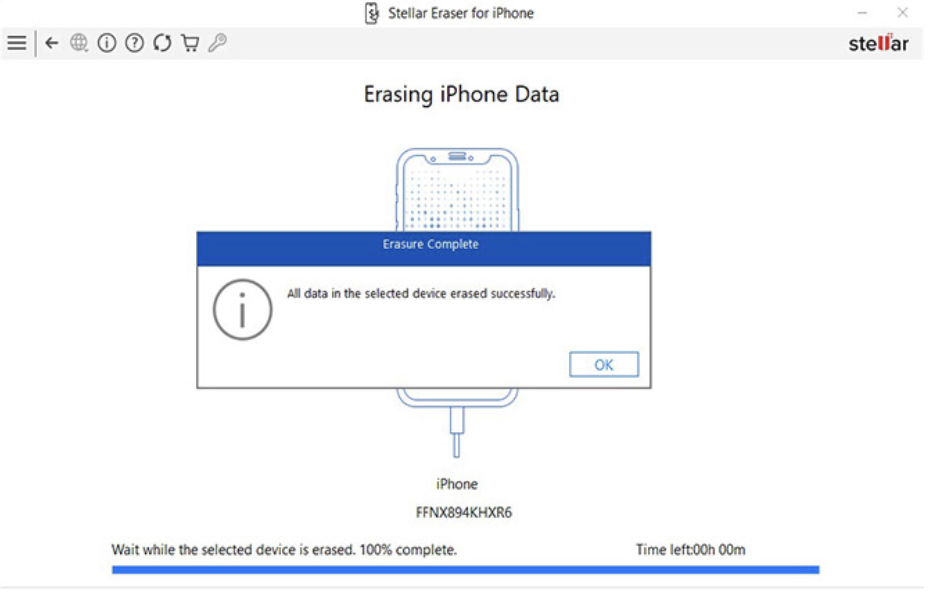
This is exactly why professionals and privacy obsessives don’t rely on the Settings menu. They use a dedicated digital shredder. Stellar Eraser for iPhone doesn’t just delete the index; it actively overwrites your data with useless junk code. It writes over the free space, the deleted files, and the system caches, making sure that even if someone hooks your old phone up to a $10,000 forensic rig, all they get is static.
The Three Types of Wipes You Actually Need
Not all erasures are the same. Depending on what you’re doing with the phone, you need a different level of destruction.
Stop Trusting the “Erase” Button
Look, Apple’s security is generally top-tier. But when a device leaves your physical possession, it stops being your problem and starts being a liability. You don’t know who is buying it. You don’t know what tools they have.
Taking ten extra minutes to plug the phone into your computer and run a proper iPhone data erasure algorithm is the difference between peace of mind and a late-night panic about your old tax documents floating around on some stranger’s hard drive.
The stuff people actually type into Google (FAQs)
Is a factory reset really enough before selling my iPhone?
On brand new, fully encrypted models, it’s usually fine because the encryption key gets trashed. But on older devices, or if you want to be 100% paranoid about third-party app caches and deleted files, no. A factory reset just hides the data. An erasure tool actually overwrites it so it can never be recovered.
Can someone recover my deleted WhatsApp messages if I sell my phone?
If you just deleted the app or ran a standard reset, the local database files might still exist in the phone’s unallocated storage. Using a dedicated wiper to scrub third-party app data ensures those hidden databases are overwritten with garbage data, making recovery impossible.
Will wiping my phone with third-party software damage the hardware?
Not at all. Tools like Stellar Eraser just send standard overwrite commands over the USB cable. It’s essentially just writing a bunch of dummy files to the flash storage and then deleting them. It won’t fry your battery or void your warranty.
What is “System Data” and why won’t it go away?
That’s iOS’s dumping ground for caches, logs, and temporary files. A standard reset often leaves a lot of it behind, which is why your “fresh” phone sometimes still shows gigs of used storage. A proper erasure tool targets this specific hidden partition and overwrites it.
The Final Handoff
Selling or trading in your phone shouldn’t feel like handing over your diary. The native reset button is a convenience feature, not a military-grade shredder. Take the extra step, overwrite the free space, and hand over a device that is genuinely, permanently blank. Your future self will thank you.
